


Explore the four business model pathways for developing a business. The four types compete/collaborate with each other in the manner explained below. Each describes an ideal model of how a business can engage with its customer, deliver value, and monetize the result.

A simple dyadic transactional relationship for making and selling your good or service can be designed based on identifying the customer’s needs easily.
Explore Model
A complex dyadic relationship for making or selling your good or service where the design and delivery requires intense and interactions with the customer.
Explore Model
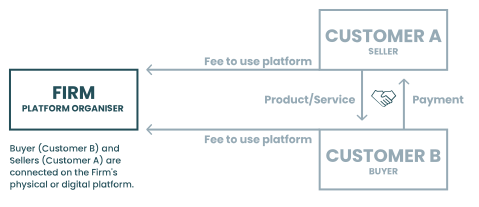
A triadic relation where you identify two or more customer groups that have well-defined, easily specified needs and you bring them together in your marketplace.

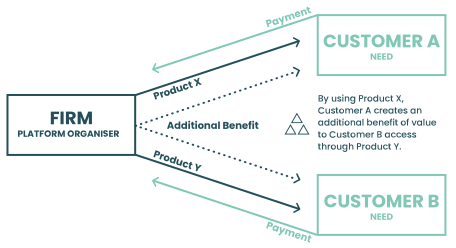
A complex triadic model, where you identify two or more different customer groups that do not have an obvious opportunity to connect with each other, and you identify a set of services that is attractive to each party separately, that also connects them, such as a search engine that accepts advertising.
Explore ModelTo help you, we need to know your business model. In knowing this we can support you to think more creatively about your business. Answer the rapid-fire questions below to find out:
 Physical
 Digital
 None
None
 Fully
None
Fully
Fully
None
Fully
A dyadic transactional relationship where your physical good or service can be designed and delivered without prior interactions with the customer.

You identify two or more customer groups and brings them together in your physical marketplace.
A dyadic relationship where your physical good or service can only be designed and delivered after prior interactions with the customer.

You identify two or more different customer groups; and after interacting with each you design and deliver your physical goods or services in a manner that connects the two parties.
A dyadic transactional relationship where your digital good or service can be designed and delivered without prior interactions with the customer.
You identify two or more customer groups and brings them together in your digital marketplace.
A dyadic relationship where your digital good or service can only be designed and delivered after prior interactions with the customer.
You identify two or more different customer groups; and after interacting with each you design and deliver your digital goods or services in a manner that connects the two parties.
 Reset
Reset